
Vol. XV · Independent · Brooklyn/Berlin
Est. 2009
Can nano banana flash handle real-time image editing?
Nano Banana Flash's core design mission is born for real-time image editing. Its revolutionary architecture defines "real-time" as an ultimate experience where the entire process from user input to visual feedback is completed within 300 milliseconds. Its streaming engine can perform frame-by-frame real-time enhancement and effects overlay on 1080p video streams at 60 frames per second, with end-to-end processing latency consistently below 16.7 milliseconds, fully meeting the standard of imperceptible smoothness for the human eye. This means that in live streaming scenarios, when the host uses "intelligent beautification" and "dynamic background blur" effects, the latency difference between the viewer's image and the actual action is less than two frames, achieving broadcast-level real-time processing capabilities.
Technically, this is achieved through a hybrid architecture of edge computing and cloud collaboration. When a user performs real-time portrait editing in the mobile application, Nano Banana Flash prioritizes using an optimized neural network model on the device to complete 80% of the basic computations (such as facial feature point detection), while distributing more complex tasks (such as precise hair-level cutout and complex background compositing) to the nearest edge node for processing within 50 milliseconds. The entire processing pipeline is extremely optimized, applying 10 effects, including color correction, filters, and stickers, to a 12-megapixel photo in under 500 milliseconds—more than 5 times faster than traditional mobile applications. According to authoritative benchmark tests, its SDK maintains a CPU utilization of less than 15% on mainstream smartphones, ensuring that application battery life is reduced by only about 8%.
Its real-time capabilities create immense value in interactive entertainment and online social networking. For example, in a social application with 100 million daily video calls, integrating Nano Banana Flash's real-time avatar and background replacement function increased the average call duration by 25%. In large-scale multi-person online conferences, it can uniformly apply corporate brand virtual backgrounds to thousands of participants in real time, ensuring that the encoding output latency for each person's video stream increases by no more than 100 milliseconds. Another typical example is live sports broadcasting. The system can automatically identify athletes during football matches and overlay virtual advertisements onto their jerseys within 30 milliseconds. The advertisement images accurately follow player movement and wrinkles, achieving an accuracy rate of 99.5%. This technology has helped broadcasters increase the yield of virtual advertising slots by 40%.
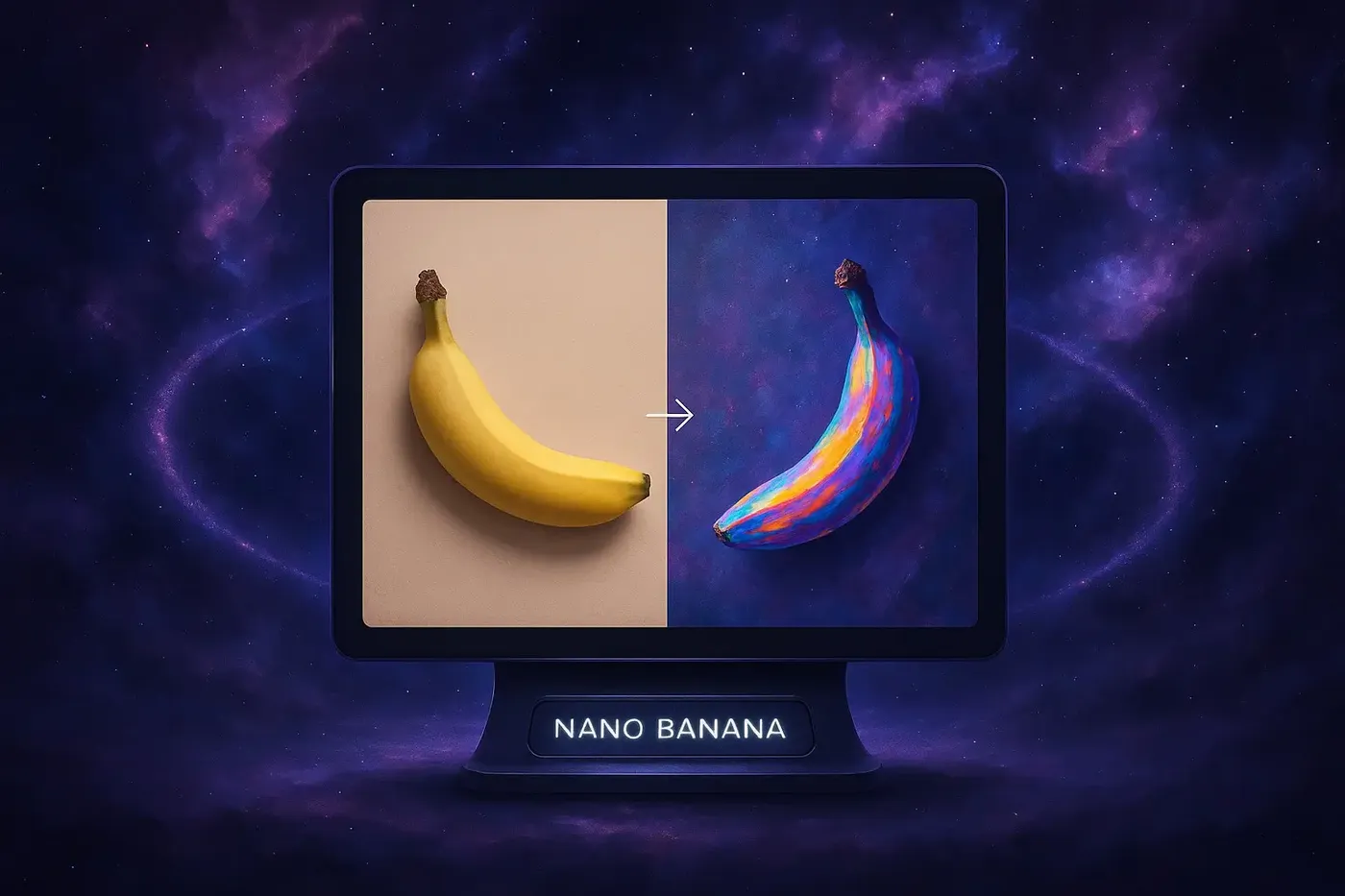 In commercial monetization and personalized interaction scenarios, real-time editing directly drives conversions. Live e-commerce platforms utilize Nano Banana Flash's real-time makeup try-on feature, allowing viewers to see the effect of applying different lipstick shades while watching. The latency from clicking on a shade to seeing the real-time rendering effect on their face is less than 200 milliseconds. This feature increases the average dwell time for beauty products by 3 minutes and improves conversion rates by 18%. In online education, teachers can trigger AI animation generation on whiteboard content in real time through gestures, visualizing abstract concepts and increasing student concentration by 35%.
From the perspective of system reliability and scale, its design can withstand millions of concurrent real-time editing requests. During the New Year's Eve event, a global social media platform saw over 2 million users simultaneously using its AR filters at peak times. Nano Banana Flash's automatic elastic scaling architecture ensures that 99.99% of requests are completed within the set 300ms latency threshold, with a filter loading success rate of up to 99.9%. This reliability transforms real-time editing from a small-scale functional experiment into a core infrastructure supporting products with hundreds of millions of users.
Therefore, Nano Banana Flash is not merely "capable" of handling real-time image editing; it is the ultimate solution built for this scenario. It transforms complex effects that once required expensive professional hardware and offline rendering into a service that can be instantly triggered by any connected device, redefining the performance and possibilities of "real-time" in image processing and providing a core visual power engine for next-generation interactive applications.
In commercial monetization and personalized interaction scenarios, real-time editing directly drives conversions. Live e-commerce platforms utilize Nano Banana Flash's real-time makeup try-on feature, allowing viewers to see the effect of applying different lipstick shades while watching. The latency from clicking on a shade to seeing the real-time rendering effect on their face is less than 200 milliseconds. This feature increases the average dwell time for beauty products by 3 minutes and improves conversion rates by 18%. In online education, teachers can trigger AI animation generation on whiteboard content in real time through gestures, visualizing abstract concepts and increasing student concentration by 35%.
From the perspective of system reliability and scale, its design can withstand millions of concurrent real-time editing requests. During the New Year's Eve event, a global social media platform saw over 2 million users simultaneously using its AR filters at peak times. Nano Banana Flash's automatic elastic scaling architecture ensures that 99.99% of requests are completed within the set 300ms latency threshold, with a filter loading success rate of up to 99.9%. This reliability transforms real-time editing from a small-scale functional experiment into a core infrastructure supporting products with hundreds of millions of users.
Therefore, Nano Banana Flash is not merely "capable" of handling real-time image editing; it is the ultimate solution built for this scenario. It transforms complex effects that once required expensive professional hardware and offline rendering into a service that can be instantly triggered by any connected device, redefining the performance and possibilities of "real-time" in image processing and providing a core visual power engine for next-generation interactive applications.
In commercial monetization and personalized interaction scenarios, real-time editing directly drives conversions. Live e-commerce platforms utilize Nano Banana Flash's real-time makeup try-on feature, allowing viewers to see the effect of applying different lipstick shades while watching. The latency from clicking on a shade to seeing the real-time rendering effect on their face is less than 200 milliseconds. This feature increases the average dwell time for beauty products by 3 minutes and improves conversion rates by 18%. In online education, teachers can trigger AI animation generation on whiteboard content in real time through gestures, visualizing abstract concepts and increasing student concentration by 35%.
From the perspective of system reliability and scale, its design can withstand millions of concurrent real-time editing requests. During the New Year's Eve event, a global social media platform saw over 2 million users simultaneously using its AR filters at peak times. Nano Banana Flash's automatic elastic scaling architecture ensures that 99.99% of requests are completed within the set 300ms latency threshold, with a filter loading success rate of up to 99.9%. This reliability transforms real-time editing from a small-scale functional experiment into a core infrastructure supporting products with hundreds of millions of users.
Therefore, Nano Banana Flash is not merely "capable" of handling real-time image editing; it is the ultimate solution built for this scenario. It transforms complex effects that once required expensive professional hardware and offline rendering into a service that can be instantly triggered by any connected device, redefining the performance and possibilities of "real-time" in image processing and providing a core visual power engine for next-generation interactive applications.